
Managing Losing Streaks in Betting: Discipline and Recovery Protocol
Anyone who bets long enough will hit a losing streak. What usually drains a bankroll is not the streak itself but the decisions made while frustrated: raising stakes to win it back, adding unplanned bets, or playing non-stop. This guide covers bankroll management at V9Bet during a bad run: why losing streaks are normal, how to spot tilt, how to set hard stop-loss limits, and a protocol for returning after a break.
Losing streaks are more common than you think
Suppose you are a strong bettor winning 52% of bets priced around 1.91. The chance of at least one losing run over a series of bets looks like this (illustrative calculation):
|
Losing run |
In 100 bets |
In 200 bets |
|
5 or more |
About 75% |
About 94% |
|
6 or more |
About 47% |
About 73% |
|
7 or more |
About 26% |
About 46% |
|
8 or more |
About 13% |
About 25% |
Even a winning bettor is almost certain to lose 5 in a row within 200 bets. Knowing this helps you stop treating a streak as "bad luck" to shake off at any cost. It is normal variance, and your job is to get through it with your bankroll intact.
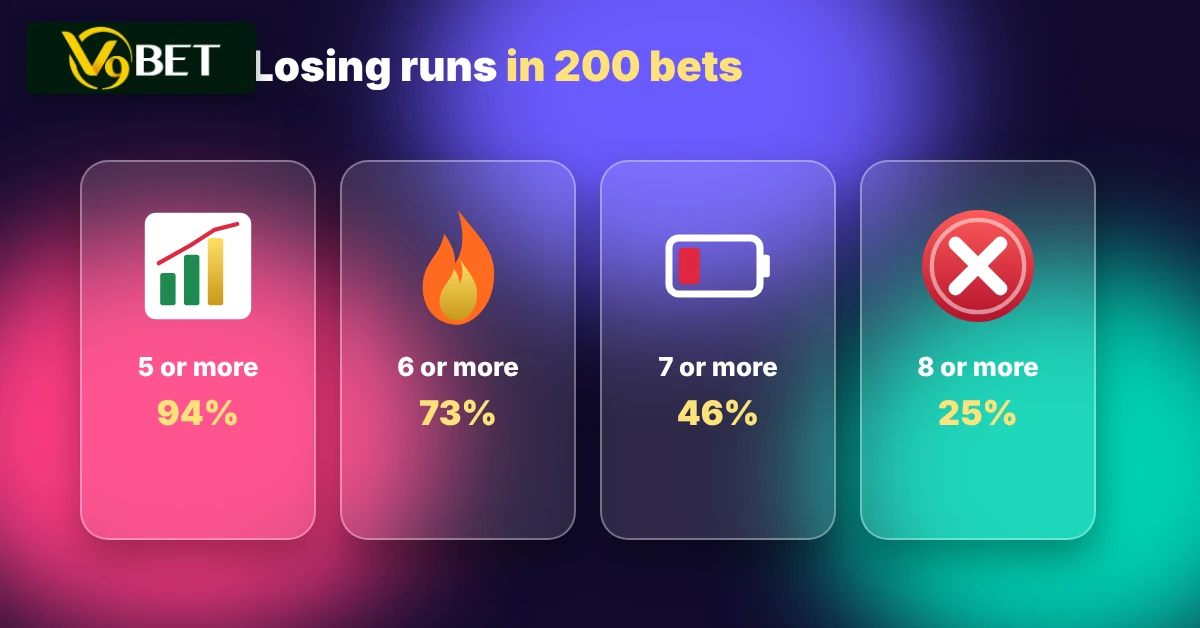
Chance of a losing run when winning 52% of bets
Betting psychology: Signs you are on tilt
Emotional betting after losses (tilt) has clear warning signs:
-
Raising stakes to recover fast: betting two or three times your normal amount.
-
Betting matches you have not analysed: picking a game just because it is on.
-
Switching to unfamiliar sports or markets: from football to fast games, from handicaps to long-odds bets.
-
Playing longer than planned: staying up late or skipping other things to keep betting.
-
Depositing beyond your budget: the clearest sign to stop immediately.
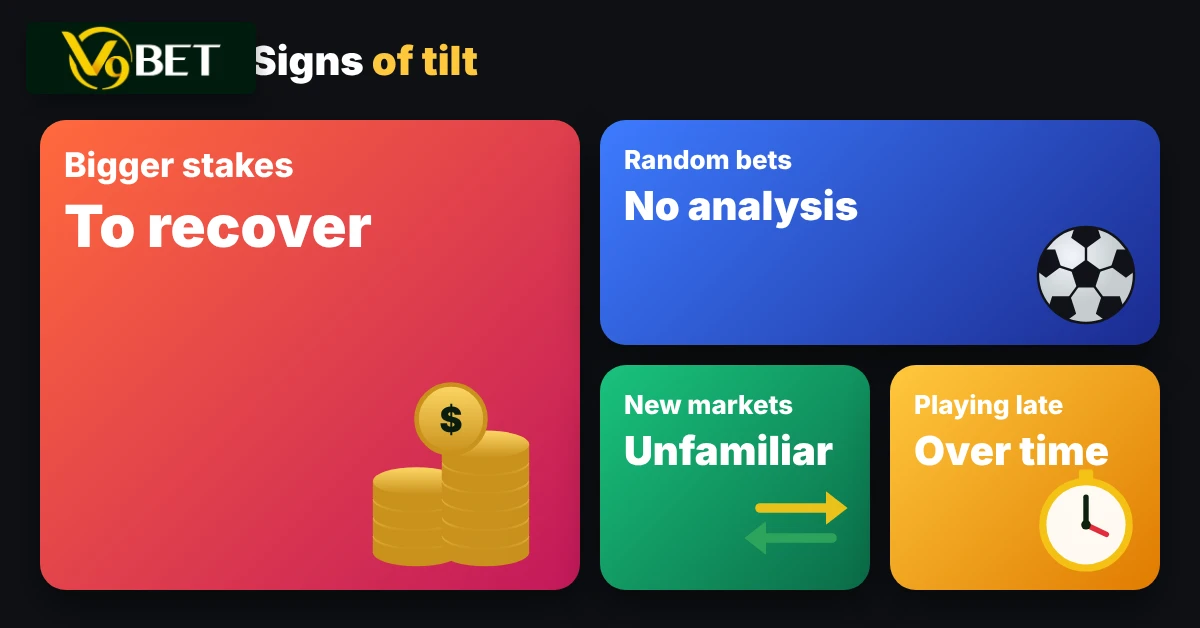
Five signs of emotional betting after losses
Stop-loss rules: Set in advance, no negotiating
A stop-loss only works if you set it before you start, not in the middle of a bad run. A suggested set of rules:
|
Trigger |
Action |
|
3 losses in a row in a day |
Take at least 1 hour off and review each bet |
|
10% of budget lost in a day |
Stop for the rest of the day |
|
20% of budget lost in a week |
Take 2 to 3 days off and keep the betting app closed |
|
30% of monthly budget lost |
Stop until next month and review your whole approach |
These numbers are suggestions you can adjust to your risk tolerance. What matters is writing them down and following them. Build real barriers for these rules yourself: deposit only the budget you set for the week, never top up on a losing day, and step away from your account as soon as you hit your stop-loss.
Recovery protocol: Returning after a break
-
Reset your budget: your new budget is what you have now, not what you started with. Do not set a goal of winning back what you lost.
-
Resize your units: 1% to 2% of the new budget per bet. A smaller budget means smaller stakes.
-
Review your log: was the streak caused by poor bets (wrong analysis) or variance (right analysis, wrong result)? Only change your approach in the first case.
-
Come back with fewer bets: in the first week, only bet the matches you understand best, with a daily cap on bets.
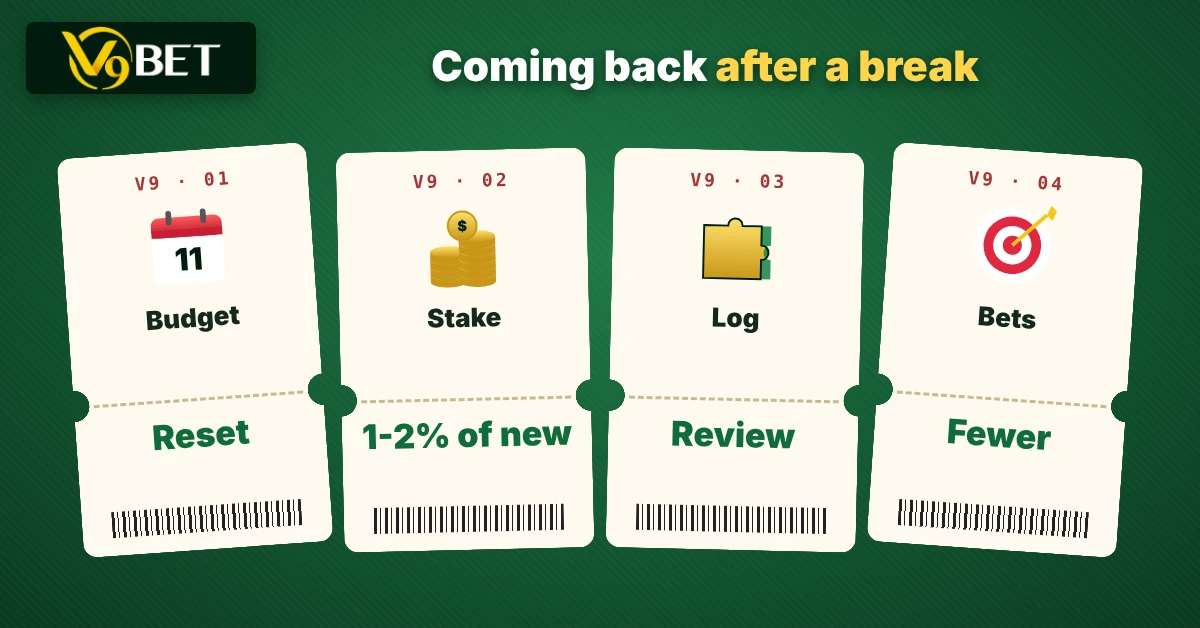
Four steps to return after a losing streak
Football betting discipline: What to avoid
-
No Martingale to recover: doubling after each loss makes stakes grow very fast. To protect your bankroll without chasing, see our Baccarat shoe strategy guide.
-
No long parlays to "turn your luck": long parlays carry a very high house edge; see our 3-leg parlay strategy guide.
-
Never borrow to bet: if you need to borrow, it is time to stop completely and seek support.
For more on bankroll levels, see five levels of bankroll management.
FAQ
Should I raise stakes during a winning streak?
Only in proportion to your budget (still 1% to 2%, but of a larger budget). Do not raise stakes because you feel "hot".
How often should I review my approach?
At least every 100 bets. Smaller samples mostly reflect variance and say little about skill.
Conclusion
Losing streaks are a normal part of betting, even for good bettors. Spot the signs of tilt, set stop-losses before you play, take mandatory breaks when you hit them, and return with stakes based on your new budget. If betting starts to affect your finances or life, stop and seek support.